Today's flight
Where do you want flying to take you? Today, on the ground at the club, you answer that first: why you want to fly, where you want it to lead, and what could get in the way. Then you name the trip you want to fly someday (a lake you want to see from the air, a city where family lives, a breakfast field you have heard about) and draw it on the chart. If it fits the rules, it becomes your long solo cross-country. If not, it becomes the scenario for your checkride rehearsal.
On the discovery flight you saw a pilot run a routine, hand the controls back and forth, and talk the trip through out loud. Today you find out why each of those happens, and you use the routine yourself on a made-up morning to make your first go or no-go call.
Every flight
Before every flight
- P
Pilot. Am I fit to fly today? IMSAFE: - Illness
- Medication
- Stress
- Alcohol
- Fatigue
- Emotion, and eating
- A
Aircraft. Is this airplane ready, and right for today? Documents, inspections and open squawks; fuel and oil on board; weight, balance and performance for today's load.
- V
Environment. What will today's flight meet? NWKRAFT, what 14 CFR 91.103 asks you to know before every flight, then the airspace and the route: - NOTAMs and TFRs
- Weather, against your minimums
- Known ATC delays
- Runway lengths
- Alternates
- Fuel required, with reserve
- Takeoff and landing distances
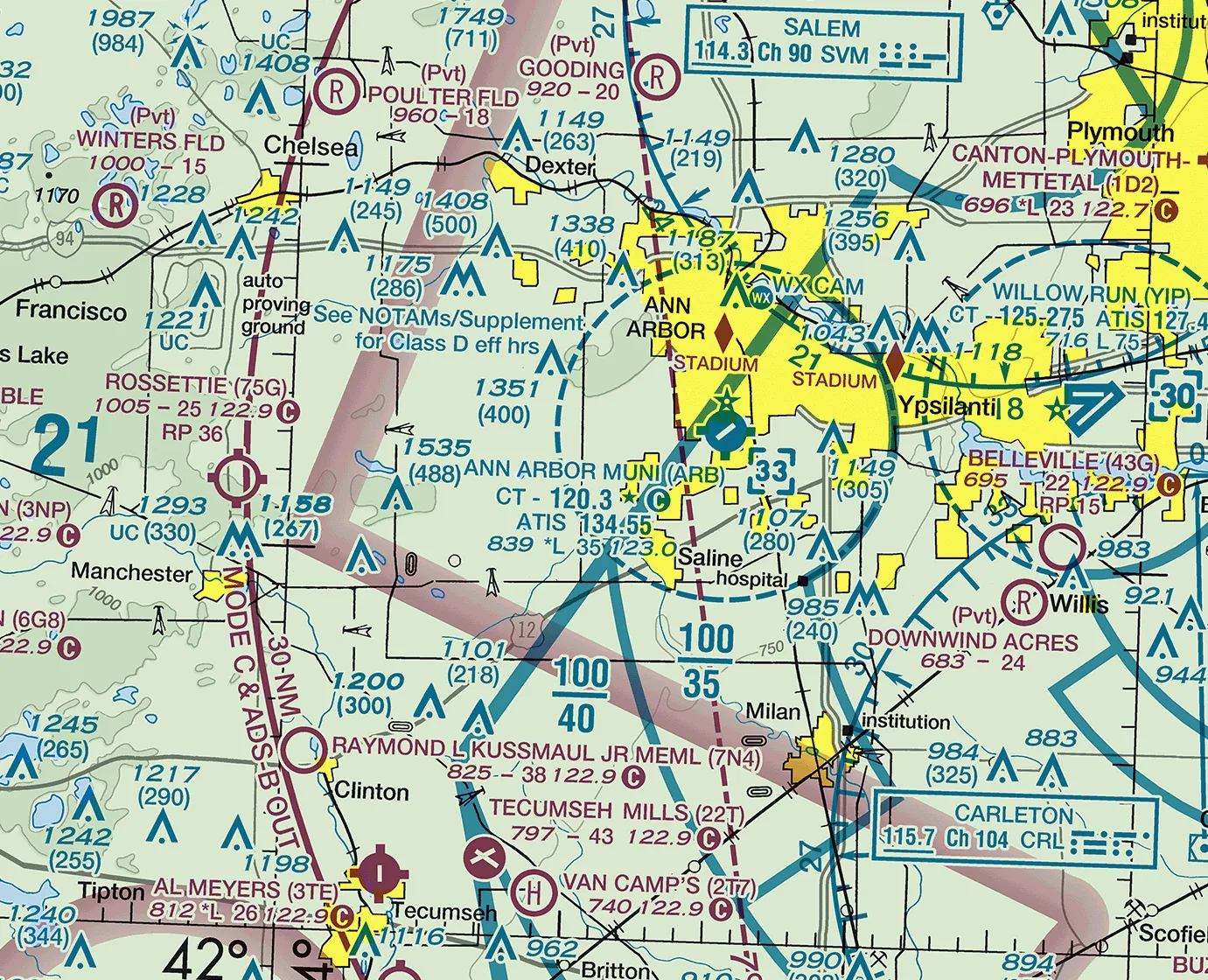
- Airspace: the Class B limits from the current chart
- The trip: heading, time, landmarks, wind and runway
- E
External pressures. What is pushing me to go today: a passenger, a schedule, a plan I don't want to cancel? Would I go without it?
-
If it goes wrong. The takeoff emergency brief, out loud: an engine problem on the runway, after liftoff with runway left, and after liftoff without.
-
Who flies. Who does what today, and how we hand the controls back and forth.
Who runs it today: The instructor, out loud, as if you were flying lesson 3 today, so you hear the whole routine once more and stop at each item to ask why.
Deeper today: The whole routine, explained one part at a time, with Pilot (IMSAFE) in the most detail: the alcohol and medication rules are the first hard limits you meet. Then The trip: the instructor walks the route to the practice area on the chart (which way, about how long, what you will see, the wind and the runway it means). From lesson 3 on, you run it with prompts.
Recall
From earlier lessons
What three phrases hand the controls from one pilot to the other?
Reveal answer
"You have the flight controls." "I have the flight controls." "You have the flight controls." Then the one handing over looks to be sure the other really has them before letting go.
Why is the practice area west of Ann Arbor?
Reveal answer
Detroit's Class B airspace sits on top of Ann Arbor, and to the west of the airport it ends. Out by Chelsea there is room to climb and maneuver without bumping into it.
What did you start on the discovery flight that you need before you can fly alone?
Reveal answer
A student pilot certificate application on IACRA and a medical certificate application on MedXPress.
Why The course bends toward where you want to go, and on the hard days your reason is what keeps you going.
Your reason to fly
- Why you: what made you want to fly, and why now?
- Where it leads: fun, taking people places, a career, or the challenge itself.
- What could get in the way: time, money, weather, nerves. Say it now and we plan around it.
- Your trip: one place you want to fly someday, drawn on the chart today.
Why The checkride and your first solo both need decisions you have already made many times, not instructions you have followed.
You are the pilot
- Legally, the instructor is pilot in command on a dual flight.
- You make the calls anyway, out loud, each with its reason.
- The instructor holds a veto, uses it only for safety, and explains it after.
- "The instructor will catch it" is a hazard: if you count on someone else, nobody may notice.
Why Knowing the milestones turns forty-plus hours into a few clear steps.
The path to the checkride
- First solo: a written pre-solo test, fifteen trained maneuvers, an endorsement.
- Solo cross-country: more training, and an endorsement for each flight.
- The checkride: at least 40 hours, including solo, cross-country, night and hood time.
- Each stage ends with a club phase check flown with another instructor.
Why You can't solo without either, and a delay in one can stop your training right when you are ready.
Your medical and student pilot certificate
- You can start training without them, but you can't solo without them.
- Medical: MedXPress, then an aviation medical examiner.
- Do it early: if anything needs extra review, you find out before you have spent much.
- Student pilot certificate: apply on IACRA; your instructor processes it.
- Bring both, with photo ID, to every lesson.
Why Every way a flight can go wrong gets a look before every flight, using the names examiners and the FAA's handbooks use, so the habit and the checkride are the same thing.
The routine is PAVE
- PAVE: Pilot, Aircraft, enVironment, External pressures.
- Pilot is IMSAFE: illness, medication, stress, alcohol, fatigue, emotion (and eating).
- Environment is NWKRAFT, plus the airspace and the trip.
- External pressures: what is pushing you to go today, and would you go without it?
- Then two briefings: the takeoff emergency brief, and who flies.
Why Two IMSAFE letters come with hard rules, and both can outlast how you feel.
Alcohol and medicine
- Nothing to drink in the 8 hours before you fly, and never at 0.04 or above.
- Eight hours can still be too soon: a hangover is still impairment.
- No medicine that dulls you, including over-the-counter cold and allergy pills.
- Not sure about a medicine? Don't fly on it, and ask an aviation medical examiner.
Why You will get more from every hour if you know where things live and what each lesson expects from you.
How this course works
- Real numbers live in your handbook (the POH) and the club checklist, not here.
- Out West, the home pattern and a triangle of local airports come back, harder each time.
- Reading and chair flying happen at home, so time at the club goes to flying.
- Fly often: two to three flights a week. Time off costs more than anything else.
- The debrief starts with you, grading yourself first.
A real accident
In April 2012 a flight instructor and a student pilot in a Cessna 172R were forced to land in a field near Richmond, Kentucky, when the engine stopped with the fuel tanks empty. The student did the preflight and checked the tanks with a fuel stick while the instructor was elsewhere; the instructor did not supervise the preflight or walk around the airplane, and did not question it when the fuel gauges disagreed with the amount the student reported. On the way home he saw the gauges reading low and continued. The NTSB found the probable cause was fuel exhaustion, with the instructor's failure to supervise the preflight and his fuel planning and management contributing, along with the operator's fueling procedures. Two pilots each had a chance to catch it, and each could have assumed the other had. That is why the routine says Aircraft out loud, why you say where each number came from, and why "the instructor will catch it" is a hazard in this course. NTSB report ERA12LA294
Your calls
Decision points
- Why you want to fly, and the trip you name.
- The made-up morning the instructor gives you: go or no-go, with the PAVE item that decided it.
- The airplane you will train in for the whole course, 152 or 172, and how many flights a week you can really commit to.
- When you will see an aviation medical examiner. Sooner is better.
- What you will do when your call and the instructor's differ: say yours and your reason out loud, every time.
The whole flight
Also on this flight
| Part of the flight | Who |
|---|
| Every-flight routine, as if flying lesson 3 today | Instructor, out loud; you ask why at each item |
| The routine again, from memory | You: twice, once with the card and once without |
| A made-up morning: go or no-go | You decide; the instructor sets it up |
| The trip to the practice area, on the chart | Instructor, out loud |
| Your own trip, drawn on the chart | You |
| Paperwork check: IACRA, medical, photo ID | Both |
| Finding your airplane's handbook and checklist | You, with the instructor |
| Booking lesson 3 | You |
| Debrief | Both, you first |
The standard
Ready to move on when
- You have said why you want to fly and named your trip, and both are written down and your trip is drawn on the chart.
- You can say the routine in order without the card (PAVE, with IMSAFE and NWKRAFT inside it, then the two briefings) and what each part is for.
- You can state the alcohol and drug rules of 14 CFR 91.17 and make a go or no-go call on a made-up morning, with the reason.
- You can explain who is pilot in command on a dual flight (61.89(a)(1), 91.3), and why you make the calls anyway.
- You can describe the steps to the checkride (61.87, 61.93, 61.109), the eligibility rules (61.83, 61.103), and the certificates a student pilot needs (61.23, 61.85), in the spirit of ACS task I.A (Pilot Qualifications) in the Private Pilot ACS.
- Your IACRA application is in, and your medical application is started or your exam is booked.
At home, before the next flight
Chair fly it
- Open your airplane's page on the club's aircraft list and download its checklist and handbook. Read the preflight inspection in the handbook's normal procedures section, then the club checklist's preflight.
- Read the parts of the club's operating rules on refueling, parking and securing, reservations (checking the aircraft out and in), and ground and preflight. They are linked from the club's member resources.
- In Aircraft Systems (Pilot's Handbook of Aeronautical Knowledge), read only these sections: Carburetor Heat, Ignition System, Oil Systems, Fuel Systems and Electrical System.
- Before lesson 3, log in to SkyManager, open your booked airplane and read its open squawks.
- With the checklist in hand, walk around the airplane in your head, from the cabin to the tail and back around the nose, saying each item out loud.
After the flight
Debrief
You go first, then the instructor. Three points at most, and you write down one thing to work on next time.
- Your first go or no-go call, on the made-up morning: what decided it, and how sure were you?
- What could get in the way of flying two or three times a week, and what can you do about it now?
- Tell me about your trip: why that one? And has anything you heard today changed why you want to fly?
Before
- Have the student's IACRA application and the club's new student orientation checklist at hand; finish anything left from lesson 1.
- Bring a current Detroit sectional or terminal area chart and a printed or on-screen club checklist and handbook for the student's model.
- Plan about 1.5 hours. If the paperwork runs long, finish finding the handbook and checklist at the start of lesson 3; never cut the student's why or the made-up morning.
During
- Open with the student's why, before you teach anything: what made them want to fly, where they want it to lead, and what could get in the way. Listen more than you talk. The answers set their scenarios, their pace and the trips you pick, and they are what you remind them of on a plateau, before the first solo and before the checkride.
- Have them draw their trip on the sectional. Don't judge whether it fits the solo cross-country rules yet; just note the distance and whether it crosses the Class B.
- Run the routine for lesson 3's flight out loud and stop at each item for the why. Keep it short: the goal is the habit and the reason, not the depth each item gets later. Then have them say it twice: once with the card, once without.
- On "who is pilot in command": say it plainly, then say why the course treats the student as the decision maker anyway. Ask them to practice saying a decision and its reason during the rest of the lesson.
- Eligibility, for the I.A questions: 16 for the student pilot certificate needed to solo (61.83), 17 for the private certificate, and able to read, speak, write and understand English (61.103).
- Alcohol and drugs (91.17(a)): not within 8 hours of drinking, not under the influence, not using any drug that affects faculties contrary to safety, and not at 0.04 or above. The PHAK's Aeromedical Factors chapter notes that a hangover is still impairment and that alcohol can stay in the body for over 16 hours. Keep it to the rules and the habit; lesson 16 goes deeper into aeromedical factors.
- The debrief scale is from the Aviation Instructor's Handbook (FAA-H-8083-9B, chapter 6, Assessment: learner-centered grading). Maneuver or procedure grades: describe, explain, practice, perform (and not observed). Risk management grades: explain, practice, manage-decide. Its guided self-assessment runs Replay, Reconstruct, Reflect, Redirect: use the same order in every debrief. The goal by the checkride is perform and manage-decide.
- Medical: don't give medical advice. If the student mentions a condition or a medication, send them to an aviation medical examiner before they spend more on training. 61.89(d) lets a student act as pilot in command under the BasicMed conditions, but BasicMed needs a medical certificate held at some point after July 14, 2006 (61.23(c)(3)(i)(B)), so a new pilot almost always starts with a third-class medical.
- Common error: treating this as a lecture. Ask more than you tell, and let the student's trip carry the conversation.
Curveballs
All briefed: this is a ground lesson, and each is a made-up morning the student runs PAVE on out loud.
- "You slept five hours, took a nondrowsy decongestant, and your sister is waiting at the club to watch you take off." (Pilot and External pressures.)
- "You had two beers at a wedding that ended at midnight, and the lesson is at 8 a.m." (Alcohol: legal on the clock, but are you fit?)
- "The squawk list says the right fuel gauge reads low, and the last pilot didn't refuel." (Aircraft, and a preview of lesson 3.)
- "Your trip needs a stop at a field you've never heard of." Have them find it on the chart and say what they would need to know.
After
- Book lesson 3 and the airplane together, ideally within a few days.
- Set the homework: the airplane's page, the operating rules sections, and the squawk list before arriving. From lesson 3 on, checking the schedule, the squawks and the weather before arriving is the student's job.
- Write the student's reason to fly, what could get in the way, and their trip in their training record, so later lessons can come back to them.